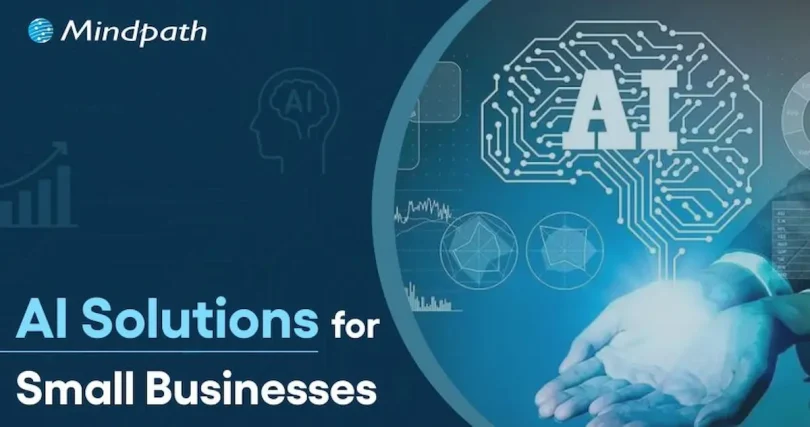

If you’re a small business owner, you may often feel stretched thin—handling customer service, managing inventory, marketing your products, and keeping track of finances. That’s where AI solutions for small business come in. Artificial Intelligence (AI) isn’t just a tool for tech giants—it’s now accessible to small businesses and can help you save time, reduce costs, and make smarter decisions.
In this guide, we’ll walk through everything you need to know about implementing AI, its benefits, and practical tools you can use right away.
What Are AI Solutions for Small Business?
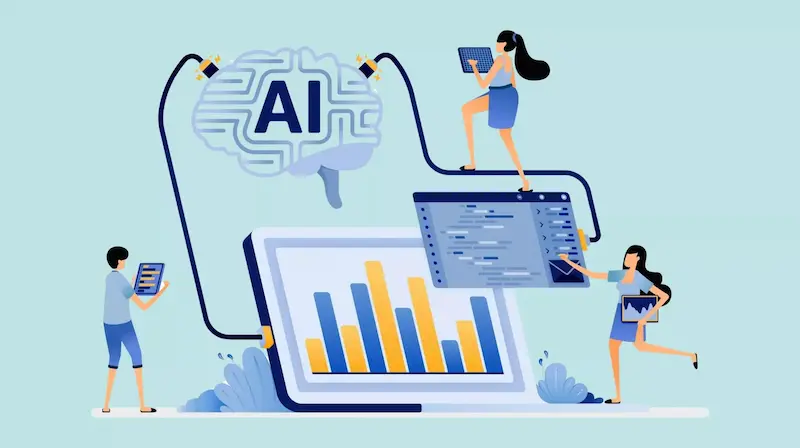
AI solutions for small business refer to software and tools that use machine learning, natural language processing, and predictive analytics to perform tasks that typically require human intelligence. These solutions can:
- Automate repetitive tasks
- Analyze large datasets
- Predict customer behavior
- Personalize marketing campaigns
- Improve operational efficiency
For small businesses, this means working smarter, not harder. AI can help you make data-driven decisions and enhance customer experiences without hiring a huge team.
Key Benefits of AI Solutions for Small Business
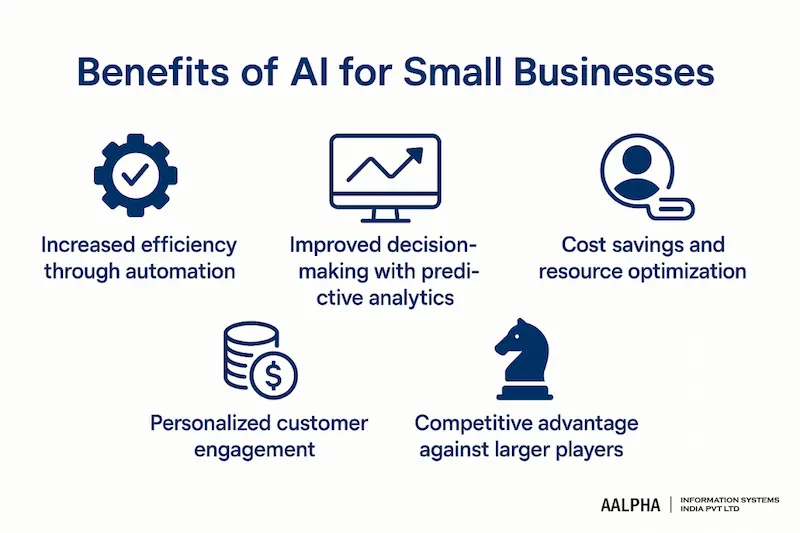
1. Enhanced Customer Service
Customers expect instant support, and AI can deliver it. AI-powered chatbots and virtual assistants are available 24/7 to answer questions, provide product recommendations, and resolve common issues. For example:
- Chatbots can answer FAQs like “What’s my order status?” or “Do you have this product in stock?”
- AI call assistants can handle basic phone inquiries, freeing up your staff for complex tasks
This improves customer satisfaction while reducing the workload on your team.
2. Smarter Marketing and Personalization
AI can analyze your customer data to help you create personalized marketing campaigns. This includes:
- Predicting which products customers are likely to buy next
- Sending personalized emails and recommendations
- Optimizing ad targeting for maximum ROI
For instance, AI-driven email platforms like Mailchimp or HubSpot can automatically segment your audience and send tailored messages based on behavior, preferences, and purchase history.
3. Operational Efficiency and Automation
Many small business tasks are repetitive and time-consuming. AI solutions can help automate:
- Inventory management: Predict stock levels and reduce overstocking or shortages
- Scheduling: Automatically book appointments or assign tasks to employees
- Accounting: Automate invoice generation, expense tracking, and tax calculations
This not only saves time but also reduces human errors that can cost money and affect your business reputation.
4. Data-Driven Decision Making
AI can transform raw data into actionable insights. Instead of guessing what your customers want or which products sell best, AI can:
- Analyze sales trends and customer behavior
- Identify areas for improvement in operations
- Forecast future revenue and market demand
For example, a small e-commerce store could use AI to track which products sell best during holidays and plan inventory accordingly.
5. Cost Savings
While AI tools may require an upfront investment, they often lead to significant cost savings in the long run:
- Reduced staffing costs for repetitive tasks
- Fewer errors and losses in inventory or finances
- More effective marketing campaigns leading to higher sales
You may also like to read this:
Complete Basic Data Analytics Tutorial To Learn Data Easily
How To Start Data Analytics | Beginner-Friendly Guide 2026
Data Analytics Tools For Beginners | Complete Guide
Simple Data Analysis Techniques For Beginners | Easy Guide
Data Analytics Learning Guide – Step-By-Step Roadmap
Popular AI Solutions for Small Business
Here’s a breakdown of practical AI tools that small businesses can use:
- Customer Support & Chatbots
- Drift and Intercom: Provide instant chat support and lead qualification.
- Drift and Intercom: Provide instant chat support and lead qualification.
- Marketing Automation
- HubSpot and Mailchimp: Create AI-powered campaigns and optimize engagement.
- HubSpot and Mailchimp: Create AI-powered campaigns and optimize engagement.
- Accounting & Finance Automation
- QuickBooks and Xero: Automate bookkeeping, invoicing, and financial reports.
- QuickBooks and Xero: Automate bookkeeping, invoicing, and financial reports.
- Inventory & Supply Chain Management
- Zoho Inventory: Forecast demand and manage stock automatically.
- Zoho Inventory: Forecast demand and manage stock automatically.
- Sales Forecasting & CRM
- Salesforce and Pipedrive: Predict customer behavior and improve sales strategies.
- Salesforce and Pipedrive: Predict customer behavior and improve sales strategies.
- Content Creation & Social Media
- Copy.ai and Jasper: Generate marketing copy, blog posts, and social media content quickly.
How to Implement AI in Your Small Business
Adopting AI doesn’t have to be overwhelming. Here’s a step-by-step approach:
- Identify Problem Areas
- Start by listing repetitive, data-heavy, or time-consuming tasks that AI could improve.
- Start by listing repetitive, data-heavy, or time-consuming tasks that AI could improve.
- Choose the Right AI Tool
- Focus on tools that directly address your business pain points.
- Focus on tools that directly address your business pain points.
- Start Small
- Implement one AI solution at a time to measure its impact before expanding.
- Implement one AI solution at a time to measure its impact before expanding.
- Train Your Team
- Ensure your staff knows how to use AI tools effectively. Many platforms offer tutorials and support.
- Ensure your staff knows how to use AI tools effectively. Many platforms offer tutorials and support.
- Monitor and Optimize
- Continuously review AI performance. Adjust workflows and strategies to maximize benefits.
Challenges to Consider
While AI solutions for small business offer immense benefits, you should be aware of potential challenges:
- Initial Costs: Some tools require subscription fees or one-time purchases. Look for scalable options.
- Data Privacy & Security: Handling customer data responsibly is crucial. Ensure compliance with regulations like GDPR.
- Learning Curve: Introducing AI requires training, but most modern tools are user-friendly and intuitive.
Future of AI in Small Business
The future is promising. AI is evolving rapidly, and small businesses can expect:
- More affordable AI solutions
- Smarter predictive analytics for marketing and sales
- Integration of AI with everyday business software
- AI tools that require minimal technical expertise
By embracing AI early, small businesses can gain a competitive advantage, improve customer experiences, and drive sustainable growth.
Conclusion
AI solutions for small business are no longer optional—they are essential for growth, efficiency, and staying competitive. By automating repetitive tasks, enhancing marketing strategies, and providing data-driven insights, AI empowers small businesses to operate like large enterprises without the extra overhead.
Start small, focus on areas that bring the most value, and gradually expand AI across your operations. The future of your business can be smarter, faster, and more profitable with AI.
FAQs About AI Solutions for Small Business
1. What is AI in small business?
AI in small business refers to the use of artificial intelligence technologies—like machine learning, chatbots, predictive analytics, and automation—to streamline operations, improve customer service, and make smarter decisions.
2. How can AI help small businesses grow?
AI helps small businesses grow by automating repetitive tasks, analyzing customer data, optimizing marketing campaigns, improving inventory management, and providing actionable insights for better decision-making.
3. Are AI solutions expensive for small businesses?
Many AI tools offer affordable pricing plans designed for small businesses. Some even provide free tiers or pay-as-you-go models. The key is to choose tools that solve your specific problems and provide a clear ROI.
4. Do small businesses need technical expertise to use AI?
Not necessarily. Many AI tools are designed to be user-friendly and require minimal technical skills. Most platforms provide tutorials, customer support, and integration guides to help you get started easily.
5. Which tasks can AI automate for small businesses?
AI can automate:
Customer service with chatbots
Marketing campaigns and email personalization
Inventory tracking and management
Accounting and invoicing
Sales forecasting and CRM tasks